Labels


Showing posts with label History And Social Sciences (HASS). Show all posts

Friday, 31 January 2020

"This Is WAY Better Than Flashcards!"


Following are a few hands-on ideas for exploring the Ancient World, and a revision activity which is, in my son's words, WAY more fun than flashcards.

We used it for language learning, but you could use it for any rote facts, like times tables or spelling words, and your children will be begging to learn!

The hands-on activities at the end of the post will have your kids hooked on Ancient History.

My youngest son Roo has been re-reading the Percy Jackson series by Rick Riordan and that sparked an interest in learning Greek.

Did you know the Ancient Greeks and Romans used slingshots as weapons, and they sometimes wrote sarcastic insults on their lead shot?  "For Pompey's backside!"

I surprised Roo with the gift of this slingshot and some small rocks the perfect size to use in it.

He was so excited when I gave it to him, and he loved the idea of writing Greek revision phrases on the rocks.

We wrote some general revision, but of course we also had to write some insults (Roo convinced me it's a great way to practice animal words).  We've been using My First Book of Greek Words.  


He insisted on trying it out straight away, even though it was super dark out!

Don't you love that this idea takes a weapon and turns it into a tool for learning??

You could write anything on the rocks; times tables, spelling, formulae...  Practise each one before you shoot and again when you collect your shot.


The slingshot gift was a hook to get him interested in exploring the Ancient World.

I often use this simple afterschooling formula: A hook, a field trip and a hands-on activity.  (Here are some other examples of that formula in action.)

For our field trip we went to the John Elliott Classics Museum and got to see real Roman slingshots, as well as lots of other fascinating artefacts.

Hands-on activities:

We wrote spelling words on real papyrus using a traditional bamboo reed pen, and compared it with using a quill.


We used some homemade Roman numeral coins to do some maths.  (Email me through the address in my profile if you want some made for you.)


We also re-watched The Story of 1 about the ancient history of mathematics...


... and we played petteia, an ancient game of pure strategy.  I made a petteia board (download here on TPT) with useful Modern Greek words for revision.  You could also draw your own board.  Check out more info about the history of the game and how to play here.  In my version, players read the word or phrase aloud and translate it into English as they move onto it.  This game really taxes the grey matter!


Next we wove laurel leaf crowns like Apollo's... Toga party anyone?  I bought some florist wire (similar here) and the boys used sprigs of our own bay laurel.


And finally we cooked Greek pita bread on our campfire.  I think this is the same grill we have and love.  The recipe we use isn't super authentic because it's a yeast-free version: Roughly 4 cups of flour, 1 teaspoon of salt, 100g butter and 375mL milk with some olive oil.


I also got the boys to read an article from Historicool magazine and do some written work from the teacher resources.

Now we're reading Horrible Histories The Groovy Greeks and The Rotten Romans.  I adore that series.

My aim with these activities was to promote interest so my kids would be more engaged when they got to this topic in Year 7 (Australian Curriculum, The Mediterranean World).

Next I want to touch on Ancient China... We've started by watching this hilarious rap battle between Ancient China and Ancient Greece from the Horrible Histories TV show:


Here's Roo hitting the books with renewed vigour to learn Greek:


Over to you.  Do you know any fun activities that make revision a bit more exciting?  What about resources for learning about the Ancient World?  Please share with us in the comments below!  Thank you :-)

If you liked these ideas, please share my blog on Facebook or Twitter using the buttons below.  Post coming soon: The Grossest Revision Game Ever!  New to the Afterschooling Blog?  Try our A-Z of Afterschooling.

Here are some more hands-on ideas for activities:
THIS POST IS DEDICATED TO REBECCA, WHO ENCOURAGED ME TO GET BACK INTO BLOGGING!  Thanks, Beck.

x x Zoe


Tuesday, 14 May 2019

An Awesome Afterschooling Formula


Here's the simple and effective formula I follow for our home education adventures.  Let me outline the components, with three examples.

I'll give you an infographic first, for those who prefer to digest information in that way.  Then I'll go into more detail with 3 examples that you can try at home.


Using this formula, the learning really sticks.  Plus, it's fun!

Now, let me give you some awesome examples you can use.

THE HOOK

The main point of the hook is to get your child asking questions.

Sometimes I do more than one tuning in activity.

Hook Example 1:

The first example is a mystery; a 'Dr Dad for PM' sign appearing in the window of our house one day.


With an election coming up, and the Australian Curriculum requirement to cover Federation for my Grade 6 son, I had a vague idea that I wanted to take my kids to see Parliament sitting.

At this stage, I hadn't assessed their prior knowledge or come up with any firm learning intentions.

Remember, the hook doesn't have to do anything except get them interested!

Hook Example 2:

Again, I had no real idea of what the learning goals would be, but I knew I wanted to do a hands-on activity dissecting a sheep's heart.  I wasn't sure if my kids had any idea about veins, arteries or how hearts work.

The hook in this case was an interesting resource in the form of a fun lift-the-flap book on the circulatory system, which I put on display in our living room.


Hook Example 3: 

Sometimes the best hooks are simple open-ended questions, like when we drove past a tower and I asked, "What do you think this tower is for?" 

THE FIELD TRIP

A field trip takes the learning into the real world.

Before the field trip we usually discuss any questions we have that we want answered.  This is when I assess their prior knowledge and firm up learning goals.

It's a great Visible Learning strategy backed by research to be very explicit with your child at this stage about what they will learn, how they will learn it, and how they will know they have learnt it.

Field Trip Example 1:

The 'Dr Dad for PM' sign sent us off to see Parliament sitting, with the intention of learning what the different roles in Parliament are and who currently fills those roles.

Field Trip Example 2:

The book about the circulatory system took us to a medical museum with the intention of learning about the history of heart surgery.

Field Trip Example 3:

We visited a Shot Tower with the intention of learning when, how and why shot was produced in that way.

THE HANDS-ON ACTIVITY

This is a really, really essential component for me.  

The hands-on activity is less about knowledge, and more about creating a fun memory linked to the knowledge.  It really helps to develop a positive orientation towards learning.

Hands-On Example 1:

My son made this beautiful mace after seeing one on a poster we got at Parliament House:

Hands-On Example 2:

We dissected a heart after reading about the circulatory system:

Hands-On Example 3:

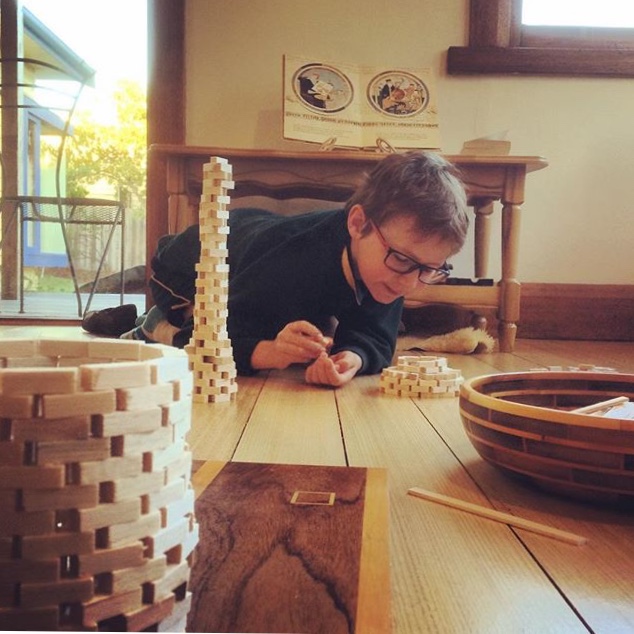
We built towers after visiting the Shot Tower.

I don't always do these components in order.  Sometimes the hands-on activity makes a really good hook, so we do that first.

If you want to see some examples of when I've used a hands-on activity as a hook, try our Cactus Invitation To Play or our Poo Provocation.

IN CONCLUSION

The three essential components of our afterschooling formula are a hook, a field trip and a hands-on activity.

Now it's your turn.  What do you think?  Please hit me up in the comments.

Stay tuned for another example of this formula in action with a post coming soon: 'This Is WAY Better Than Flashcards!'


Monday, 28 May 2018

Aboriginal-Inspired Story Stones

Here is an easy-to-make resource which encourages engagement with Aboriginal and Torres Strait Islander Histories and Cultures (a cross-curriculum priority in the Australian Curriculum).


Ever since I completed a teaching practicum on the APY Lands in central Australia I've been fascinated by the Anangu art symbols and by the Pitjantjatjara language.

My interest prompted me to make some clay story stones using Aboriginal symbols (see the list of symbols and their meanings here).  This is something you should get permission from the local community to do if you’re planning on making your own!

So far, we haven't used the stones to tell stories, but we have been testing our recall of what the different symbols mean and trying to identify the symbols in Aboriginal art.

There are some fantastic animations of Dreamtime stories on YouTube.

The stones were easy to create out of white handbuilding clay.  I fired them, used an underglaze pencil to draw on the symbols, then fired them again.  If you don't have access to a kiln, you could make them using real rocks and a Sharpie (I've done that before, too, and it worked just fine).  Or you could have your children make them.

Have you ever made or used story stones?  What was on them?  Please share in the comments.

As always, thanks for reading!  If you liked this idea, you might also like our Aboriginal-Inspired Shell Necklaces or our Clay Creation Station. 

Calendar Clinkers

Dr Dad grew up with a Clinker Family Law:  If you get a pink one, you have to kiss mum!

That gave me the idea for the following game (no kissing involved).


You bite a Clinker, then choose a yellow, pink or green quiz card depending on what colour Clinker you get.

The cards review information about 4 different calendars used in Indonesia (answers in the download).

You can get the game for free here on TPT or by clicking the image above.

Delicious family fun!

You could adapt this idea to review other learning, too.

Let me know in the comments if you use my game or make your own using Clinkers!  I'd be stoked!

If you liked this idea, you might also be interested in how we learn to tell the time with a world clock wall.  

Saturday, 19 May 2018

Easy, Cheap & Fun Way To Learn To Tell The Time


This year my Grade 2 son is getting to grips with telling the time (Australian Curriculum, Year 2).

We've been doing two things.

The first is a really fun and cheap iPad App called SqueeblesTM.

My son loves it because there's a motivating game as a reward.  I love it because I can change the settings to make it progressively more difficult.

Next, to encourage him in his efforts, I put up some cheap thrifted clocks on our back deck.

They are set to the time zones of the places we've lived, so I'm getting some geography in there, too, and hopefully opening his eyes to the rest of the world and our place in it.

Time is a hard concept for young children because our subjective experience of it is so unreliable.  It gets really fascinating when you start talking about time zones, different calendars and even... time travel!

What do we want?  Time travel!  When do we want it?  It's irrelevant!

I know, bad joke.  But since no-one came from the future to stop me telling it, how bad a joke can it be?

Do you know any interesting resources for learning to tell the time?  Do you have any favourite science fiction books about time travel?  Please let us know in the comments!

Thanks for stopping by.  If you liked this post, you might also like our Calendar Clinkers game, or check out our favourite maths games and another backyard improvement, our bird feeders.

Aboriginal-Inspired Shell Necklaces


Here is a hands-on way you can engage your family with Aboriginal and Torres Strait Islander Histories and Cultures (A cross-curriculum priority in the Australian Curriculum).

NAIDOC Week is coming up on July 8, and the theme is 'Because of Her, We Can!'

The following activity celebrates the Aboriginal women who create stunning shell necklaces.

First you need the 3-book set Tasmanian Aboriginal shell stringers.  You can download a fantastic, free multimedia presentation of the books here!  (Requires Flash)

To engage my kids with these books, I set up an 'invitation to create' using string, shells with holes and some beads (not traditional but we didn't have enough shells).

Sourcing the shells sustainably can be a challenge.  The folks at Simply Shells get their shells as a bi-product of the food industry or from abundant species.

The books explain which shells are normally used and how the shell stringers create their necklaces.  You can check out more in-depth teacher resources here.

For a related field trip, the Tasmanian Museum and Art Gallery (TMAG) has a wonderful display of Aboriginal shell necklaces!


Can you think of other ways to engage respectfully with our local Aboriginal histories and cultures?  Please tell us in the comments!  And if you liked this idea, please spread the love.

Looking for more ideas?  Try Aboriginal-Inspired Story Stones!